
Following the Threads — a conversation with Tajette O’Halloran
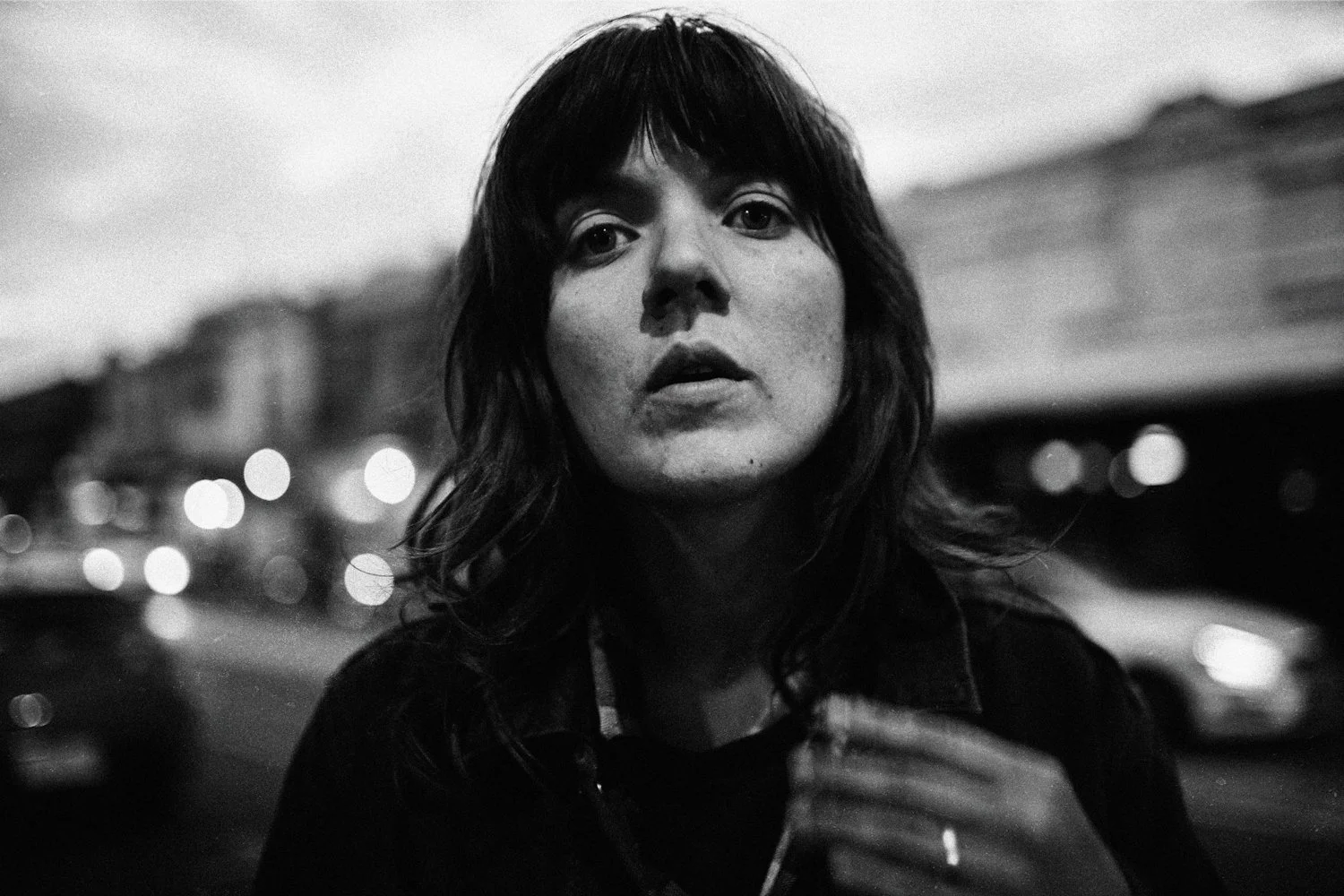
By Adam RivettTajette O’Halloran’s work is intimate and revelatory — a glimpse of a lost moment somehow rescued. As a photographer her work has appeared in numerous publications including The New York Times and The Guardian, while she has been named a finalist in the National Portrait Prize in both 2021 and 2023, and was shortlisted for numerous photography awards including The Olive Cotton Award (2021) where she received an honourable mention, The Doug Moran Photographic Prize (2016-2019) The Bowness Photography Prize (2016,2019) and The PH Museum Women’s Photography Grant (2021).
As The Pool Collective’s newest member, I sat down with Tajette recently to discuss her photography and her attitude towards images both captured and created, in the process clarifying many of my initial impressions of her work. After a short chat about children and weekends, we naturally fell into a discussion of Tajette’s own images and the bodies and lives found within.
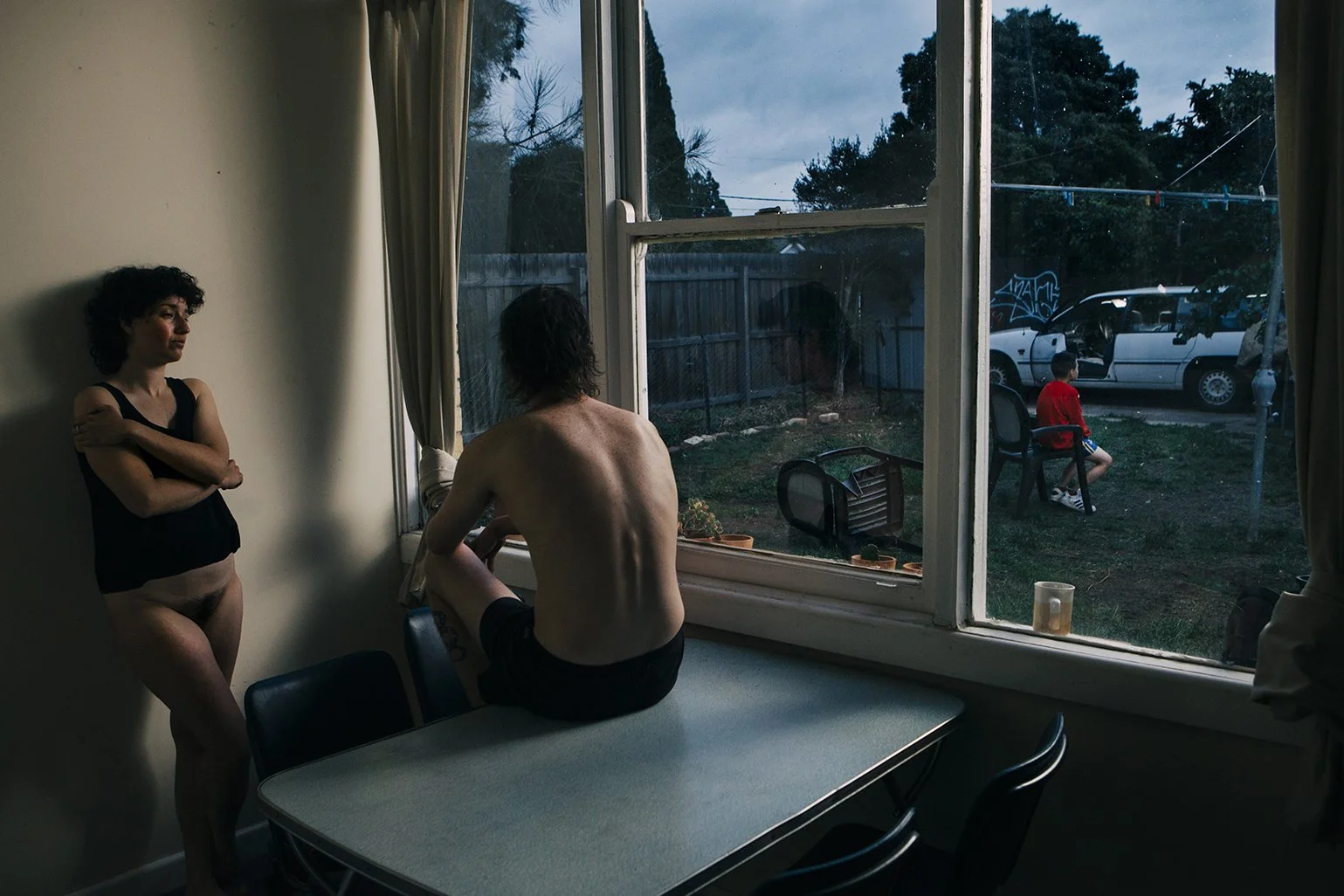
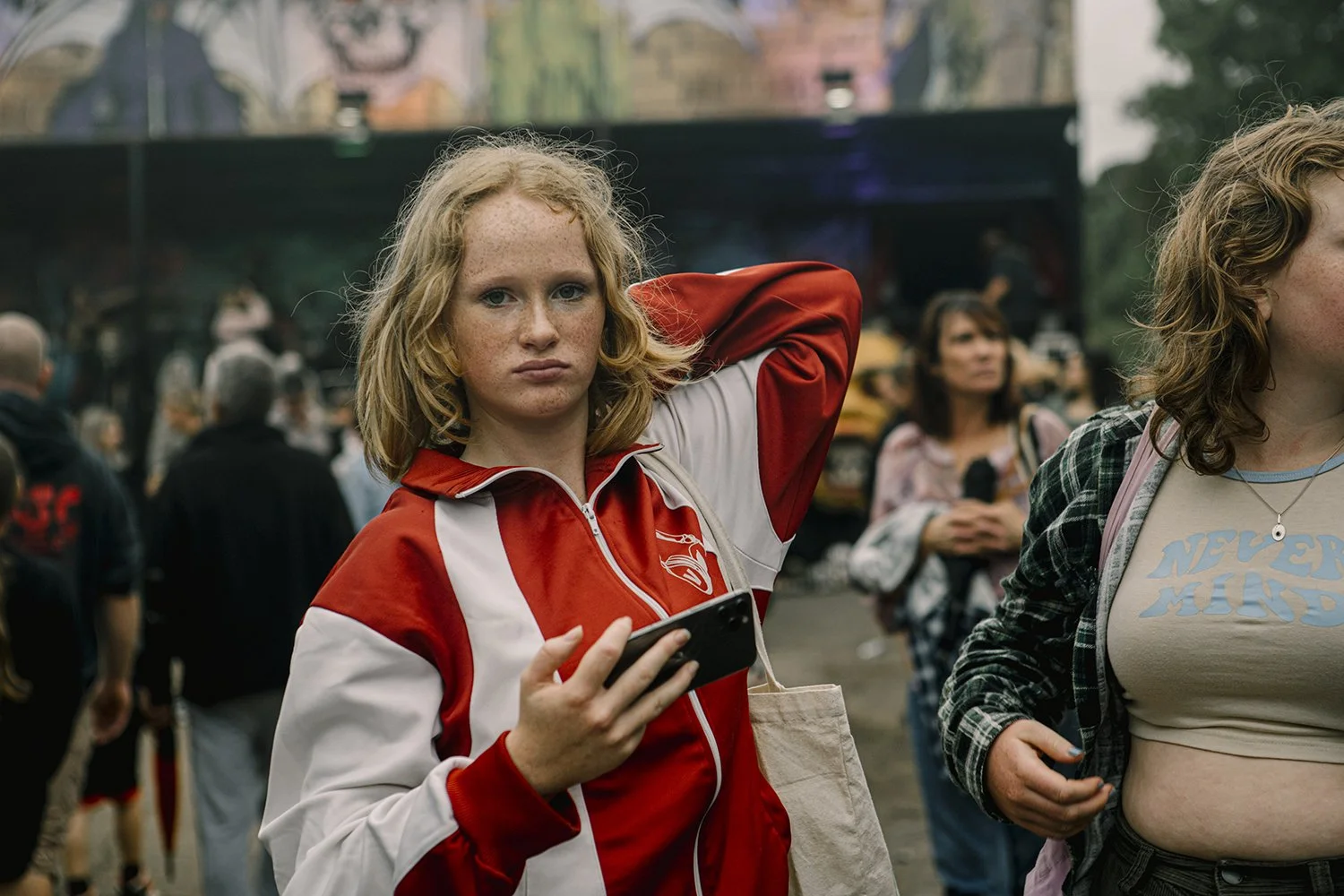
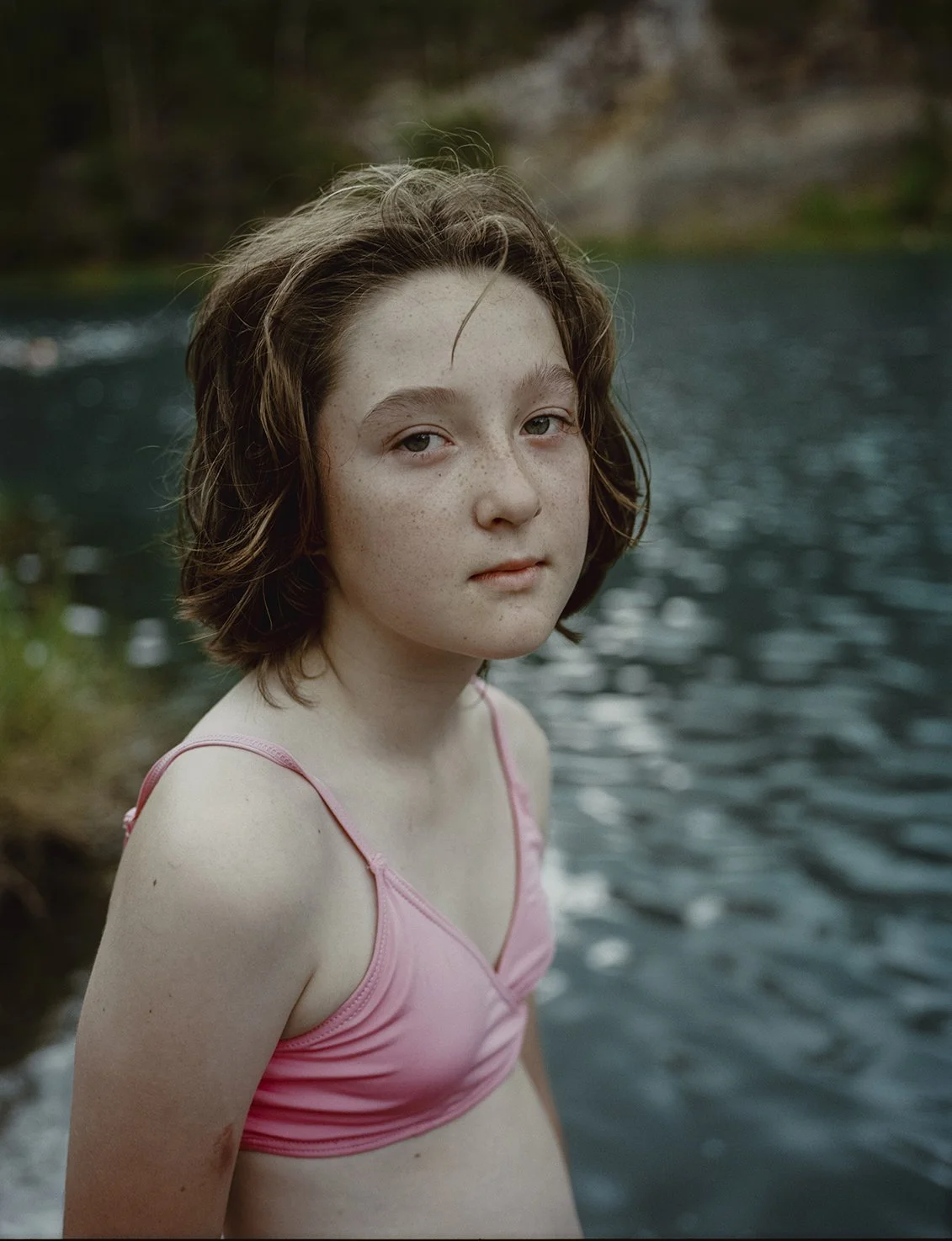
Adam Rivett: Children are a good lead in, because I wanted to ask you about the photos you took in Lismore, at some kind of country fair or amusement park at night. The one thing that really struck me, the thing which resonated with me, was how the photographs captured the awkwardness of teenagers in their own bodies. The whole culture industry is all about making teenagers look confident and sexy, like adults before they're really adults, which is just this massive lie, which in turn makes teenagers feel neurotic, like they're failing at being teenagers. Whereas your photos are so committed to the honest truth about teenagers, so to speak. Is that something that you have always focused on, or something you think is a relatively recent thing that you have started to see? They seem to be a very authentic representation of a life you just don't see as often as you think you would.
Tajette O’Halloran: I think a lot of my work draws on my own adolescence. The locations that I visit, and the subjects that I choose to photograph — I guess I'm drawn there because they remind me of my own experience as an adolescent growing up in a regional landscape. I moved back to Lismore in 2022, but I actually grew up here, and I left when I was 18. So my only experience of really being here and living here was as a ‘kid’. I never lived here as an adult. So I guess coming back here, it was just so interesting, and I was so curious to revisit all these places that felt so nostalgic and held so many kinds of memories. And so much of it so unchanged as well. The photos you're referring to were taken at the Lismore Show, and I could have literally just time-travelled back there. Everything's exactly the same.
AR: Did that surprise you, that coming back and finding it so unchanged, or did you not really plan on it? I did think about some of the shots, and then reading a little about where you grew up, and I did think, well, I’m guessing there’s an aspect of reclamation and remembering here. Does it make it oddly easy to access that visually when so much of Lismore is unchanged, so to speak?
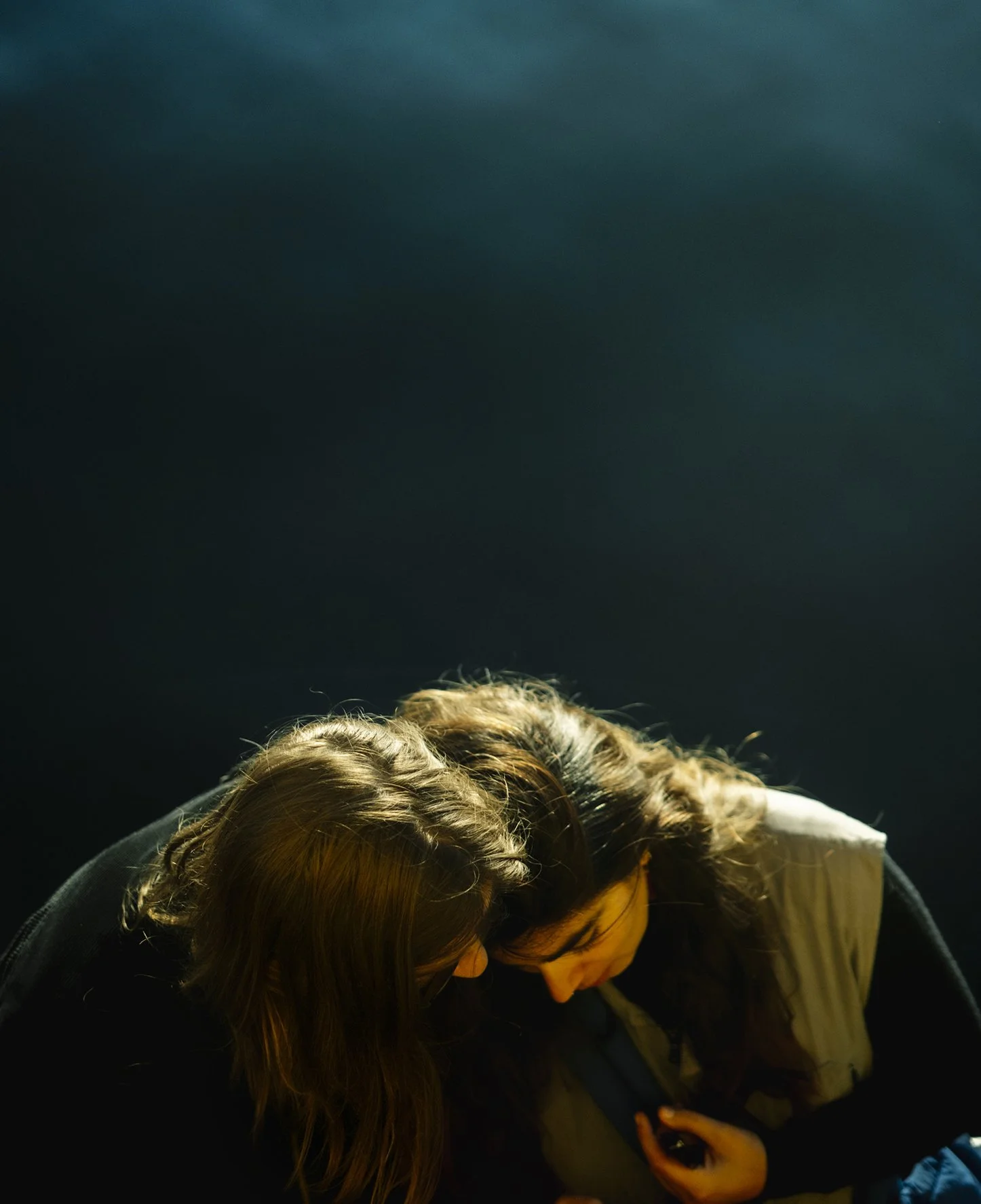
AR: Some of your recent photos feel immersive, as if you've spent hours with your subjects before capturing a moment. Others seem more designed or, as you say, constructed realities. I guess those aren’t from Lismore but are recreations. Is there crossover between these ways of working? I know “construction” and “reality” are complicated terms, but do the two approaches influence each other?
TO: In Australia stands alone in how I made those images and cast the people in them. That process was completely different. I would cast and plan shots, often visiting specific locations. My other work is more aligned with documentary; I photograph what and who I see in the moment. Some images from the In Australia series were taken in Lismore when I travelled here, others in Melbourne, but all were ultimately influenced by this area.
AR: How much trust is involved in being with those people and shooting them? You often catch them in very fragile or humane moments. Sometimes they’re stoic or proud, but often they don't seem aware of the camera, as if you've been embedded with them long enough that they aren't self-conscious in your presence. Is there a lot of time spent earning that trust, like the quarry shots or those shots taken in suburban front and backyards? Do you let them ease into the scene, so to speak, or do you sometimes get the shot you're after quite quickly?
TO: The level of preparation with my subjects actually doesn’t take the path you’d imagine it would. I'm not embedding myself in their lives because the work isn’t about their life — it's actually about mine. I tell them as much as possible about my vision for the work, or what is necessary for them to know about my vision, as another way of looking at it — making clear this series is based on my own adolescence. I then work with my subjects to replay moments and events from my youth. I don't need to know about their own lives, but it’s highly likely that at a certain juncture during this process of re-representation of my own youth, I meet my subject experiencing something very similar in real time.
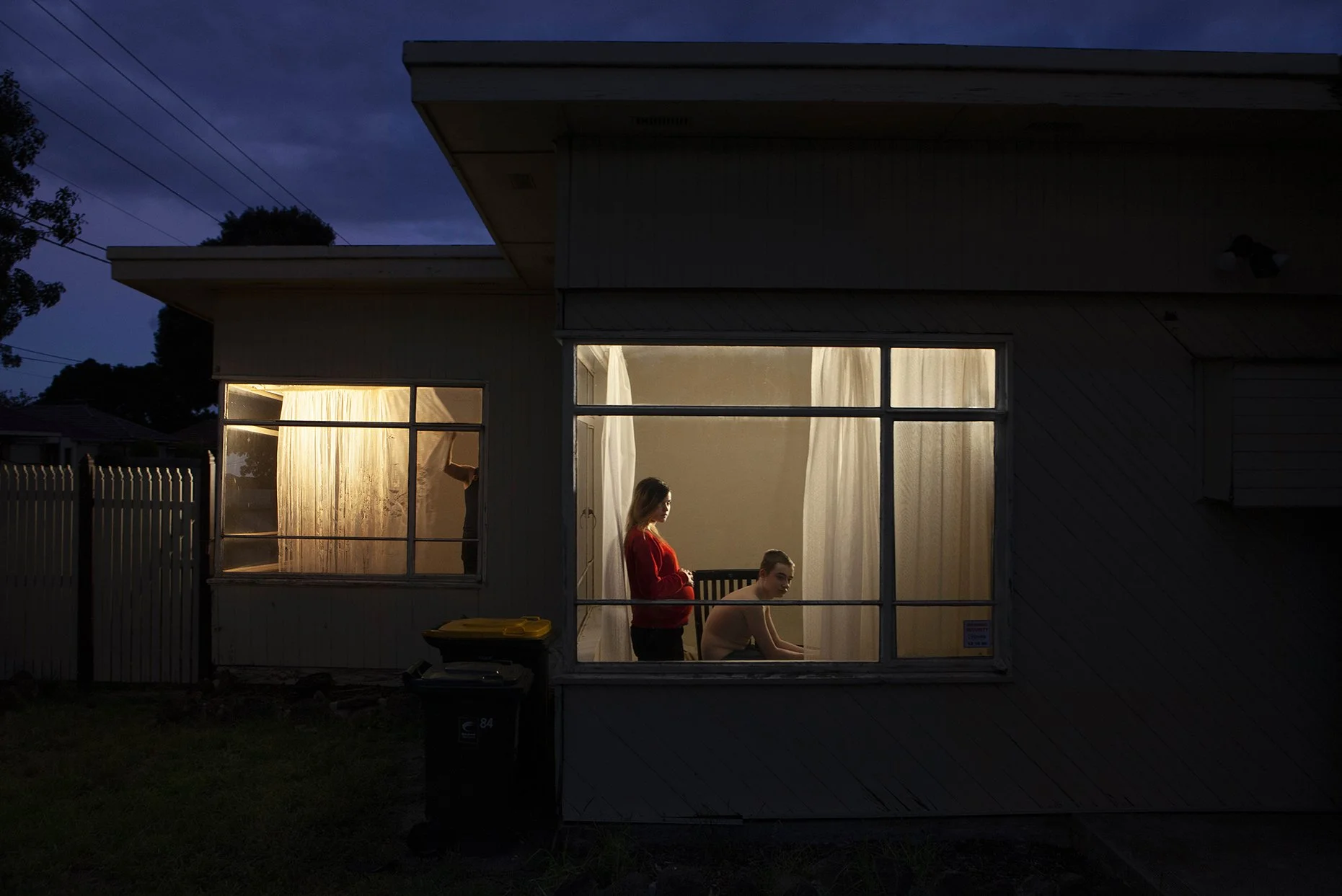
AR: Is there a slightly surreal quality in using other people who have their own lives and backgrounds in the present moment to recreate your past?
TO: I compare it to hiring actors, even though these people aren’t actors. I don’t need them to perform much; I just want them to understand the feeling I want to convey in the photos. I focus on capturing their expressions and body language. Every shoot is different, since I cast people from various backgrounds and through different avenues.
AR: What do those casting calls look like then? You must have someone in mind from your youth, and then you have a casting call, and someone walks in, and you’re like, bang, that’s it, that’s my childhood!
TO: Sometimes my casting process is literally me driving and screeching and doing a U-turn because I see someone walking along the street and I think, "Oh my god, they would be great!"
AR: How do people respond to that kind of proposal?
TO: Some people immediately say no to having their photo taken, feeling uncomfortable or assuming it’s a big production. I explain it’s relaxed and try to ease their minds. Most people I've approached have been interested. Some are referred, and some are pure happenstance — my sister’s best friend’s son really reminded me of my first boyfriend, so that type of resonance with my adolescence is a trail I like to follow. He also understood and related to the project because he grew up here. Others, like a 15-year-old girl and her boyfriend, I found through my mechanic. Each casting experience is different — it’s just about following the threads. Making this work was easier from afar, but being back in this small community makes it more daunting. I haven’t abandoned it, but with other projects demanding attention, it’s on hiatus for now.
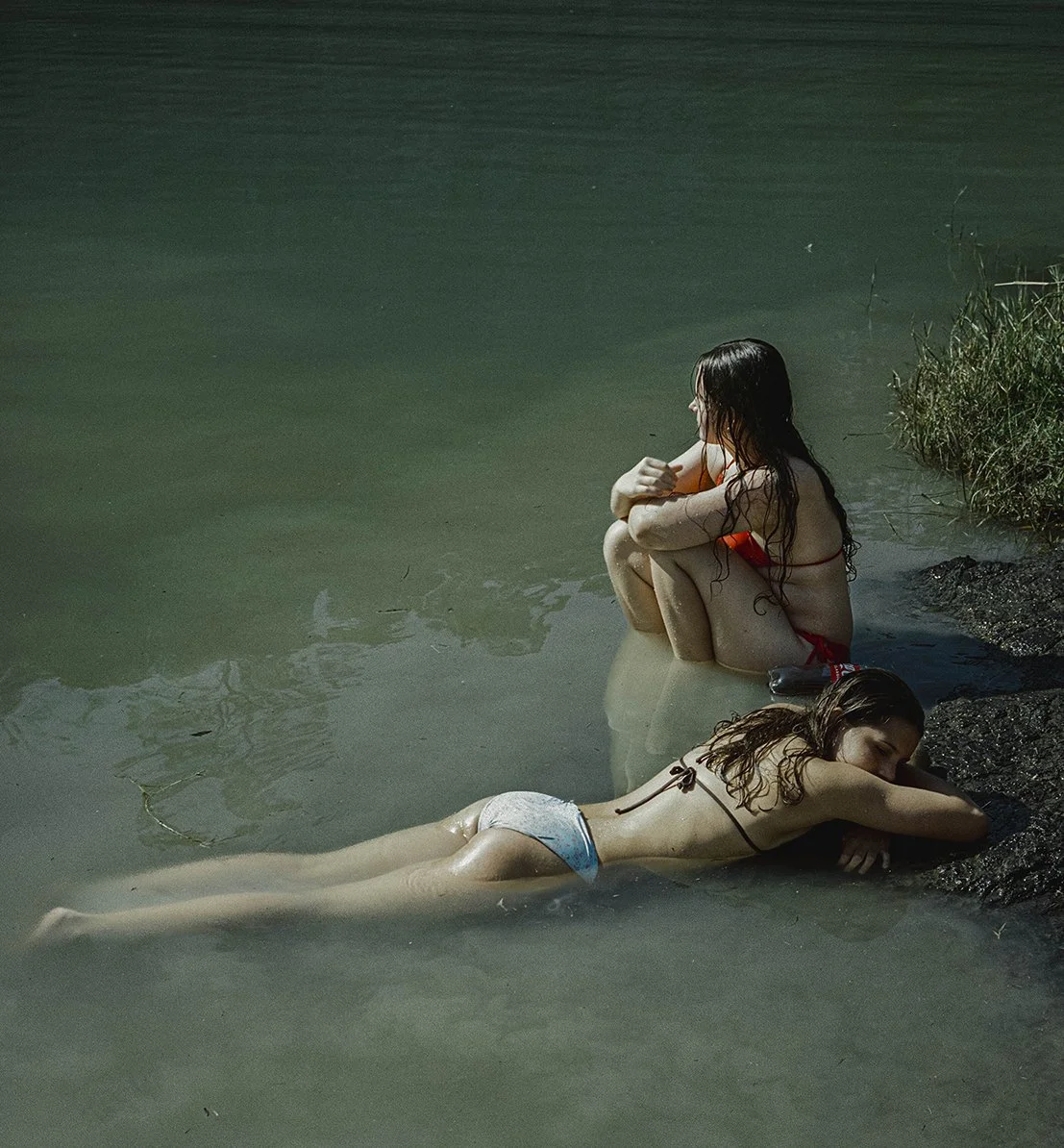
AR: Are the quarry photos adjacent to In Australia, or is it its own distinct project?
TO: It’s a distinct project, but I've toyed with the idea in my head of one day making a body of work or a book or something with all the series together and seeing how they can all come together as one story.
AR: Is something like your series Dismantling a Life part of that as well?
I noticed a lot of those photos weren’t as focused on the human but were more attentive to natural spaces, light through a window, and flowers —they're a bit more abstract, a bit more adrift from the other work.
TO: Well, that was a real branch off, because it was about losing my Dad, so I guess in my mind it doesn't really tie into the adolescent thing, but of course it's all part of life and my own experience, so who knows? But that one I was compelled to make as he was dying. It was a very different feeling, making that work.
AR: I guess the good thing about a title like In Australia is that it’s so capacious. You can really put anything you want in there and just insist as an artist, “Yeah, it goes in there because it's Australian, I say so!”
TO: Exactly. But the Quarry series, that actually started when I was scouting locations for In Australia. Every time I went to the quarry, there was something kind of weird and wonderful happening there that intrigued me. From there I started documenting, and I realised that it was something in and of itself, separate from In Australia. It just took off, which was really freeing and a breath of fresh air. In Australia was very difficult and slow, and required a lot of preparation and organisation. You know, I couldn't just go out and make an image for that series, so much went into the planning, it was constantly stop-start, stop-start. Whereas with the quarry, I could just go there whenever I wanted and make work, which felt so freeing. It just flowed.
AR: So earlier I mistakenly assumed that there was a larger amount of personal embedding in the work, which was a very naïve non-photographer reading, whereas now it's clearer that you’re more interested in recreating and casting, but is that true of the Quarry work too? Those photos felt so lived in the first time I saw them late last year. Did you work closely with some of those people for hours, or did you kind of just position them in the quarry, like they were models, so to speak? Those photos felt like they had a lot of time and waiting in them.
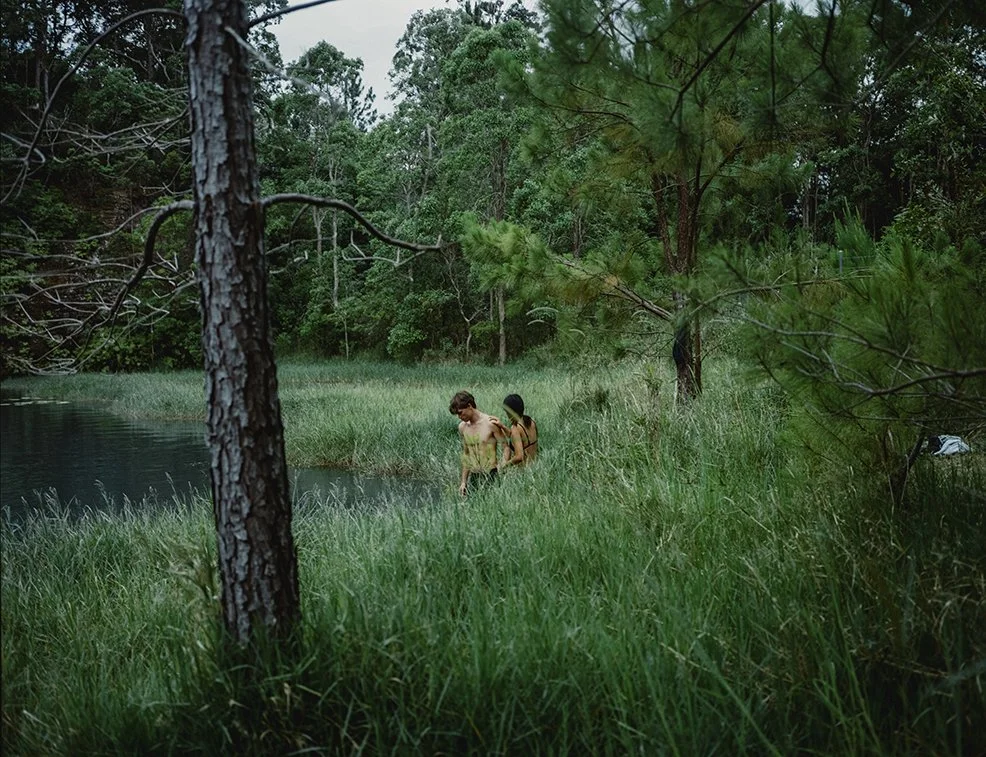
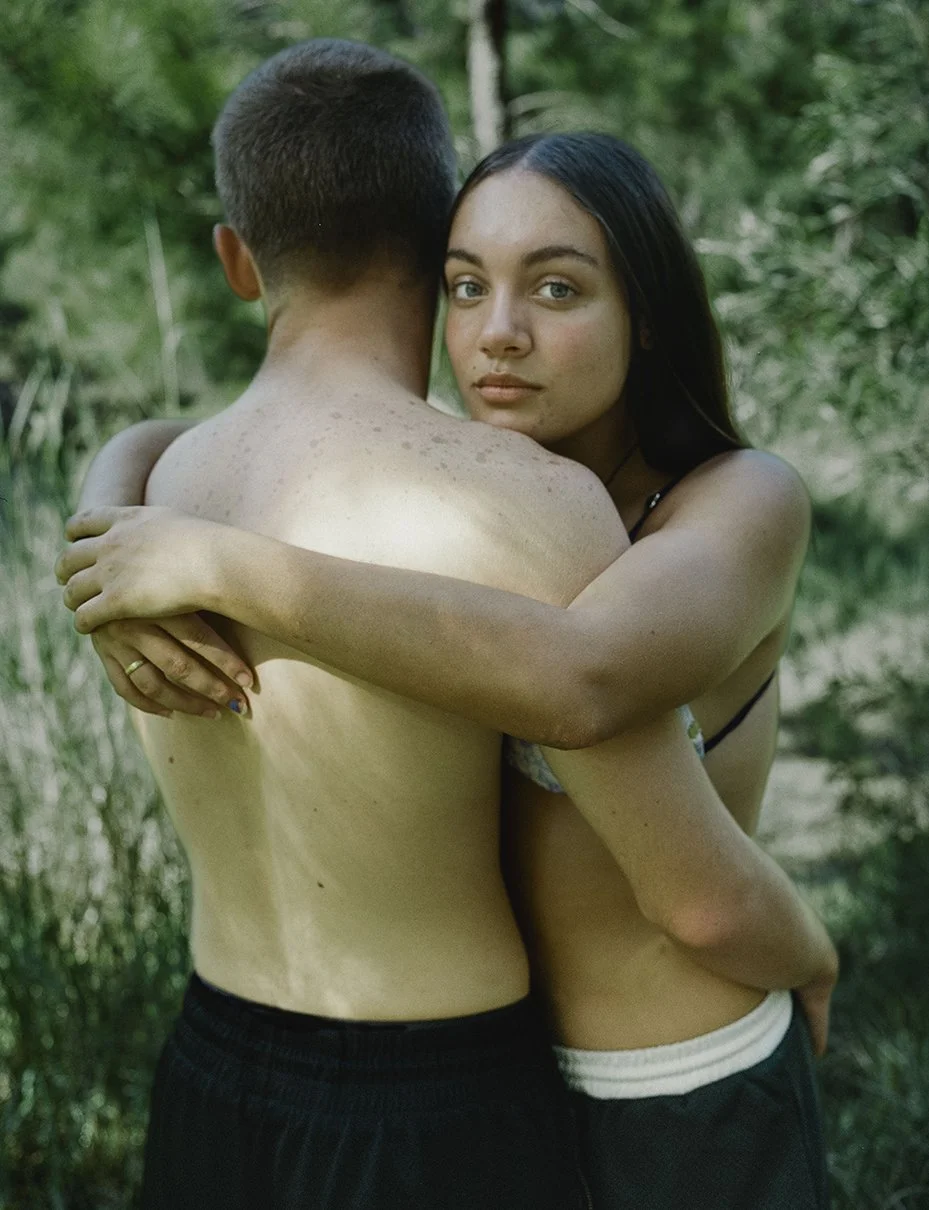
TO: I've definitely spent many, many hours there over the last four years, but I don't spend a lot of time with the subjects. I think it's more about the quarry itself and what is happening in this space, and why it's happening, rather than individual in-depth stories about the subjects. I guess what I’m saying is that it’s difficult to separate the subjects from the space, or the time. It’s a moment, lots of moments, that I am capturing.
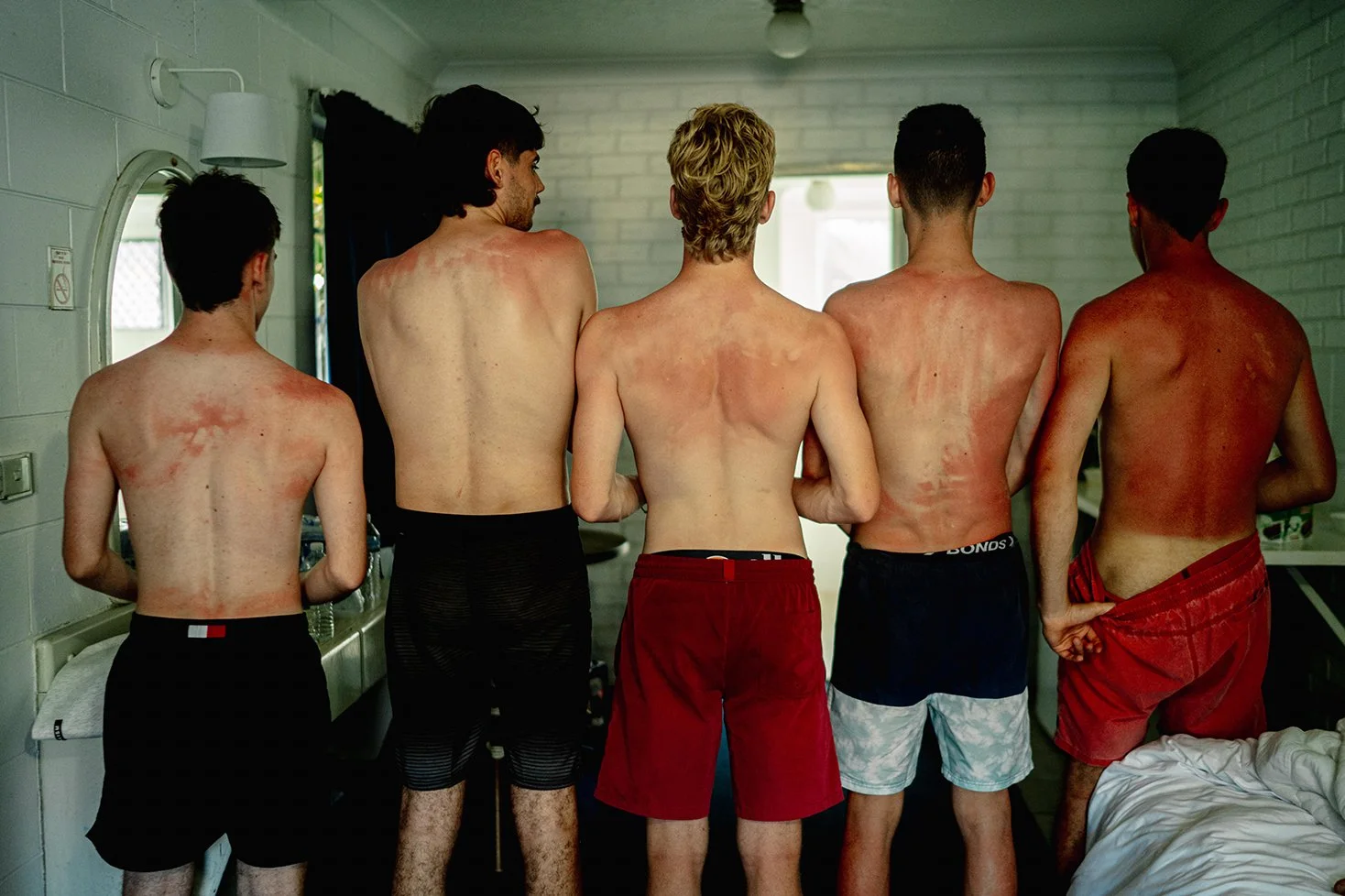
AR: It's funny, when someone writes a long novel or makes a three-hour autobiographical film, they've had to dig into memory and then strenuously recreate the past. But photos have this certain quality of immediacy — you're working all these hours, casting and contemplating and dredging up memories, all to create one perfect image that, for you, resonates all the way back into your own childhood, while also feeling very contemporary. And that makes us wonder about the creative versus documentary aspects of your work — I’m thinking in particular of the Schoolies photos you took for The Guardian and how those subjects responded to your presence.
TO: That was a totally different kind of process. I was working with a journalist who was also interviewing the subject. So it wasn't just about me capturing what was happening; we actually had to go talk to every single person we photographed and let them know what we were doing. I did Byron Bay last year, and then went up to the Gold Coast this year with the same journalist. It's a lot of fun, but very different. And because it's so concentrated, like we're literally shooting over two days, not two years, you can't be as selective with the people that you photograph. Like you’ve just got to get what's happening there quickly, and then it’s over.
AR: Without getting too abstract, I was also wondering about how your work has changed in your mind over the years — if it feels like you’ve been narrowing in on something in the process, or if what and how you shoot is quite different now to the earliest work you shot, if it's the typical artistic process of, you know, narrowing and selection, because when you’re starting out you're groping in the dark, so to speak.
TO: I came into photography very late, compared to some people. Like, I didn't really have it figured out for a while.
AR: I know it’s a cliche, but it's amazing how many times people say the same thing – “oh my grandfather gave me a camera, and then there was the dark room at school”.
TO: I did do photography at school, and yes, there was a dark room! I chose it as an elective and was interested in it, but I was really bad at it! I looked through my photography journal from my year 11 and 12, not that long ago, and my teacher put, you know, “more effort needed” blah blah blah. So I just didn't realise that apart from enjoying it, it could be a life. I never saw it like that — that it could be something beyond taking photos of my friends. And then when I was twenty-five or so, I decided that I wanted to make music videos, and I went and did a screen course, moved to Melbourne, worked as a location scout, all of it, and was introduced to some friends who were doing photography and making amazing stuff, and the penny just dropped. So it had nothing to do with my grandmother giving me a camera; in a way, I just kind of came back around to photography on my way to avoiding coming back to photography.
AR: Actually, that does lead into something else I wanted to ask you, so I'll give you an escape from this painful autobiographical reminisce. Do you see influences or people who you are still inspired by that kind of bubble up through the current work, or do you feel like you’ve worked through and beyond those earlier influences? And I don't just mean photography, I'm talking about any kind of art. I think it all comes from different directions and places. Do you see any of that stuff still or feel inspired by it?
TO: I think, as opposed to the very early work that I was making, which was outward looking, it wasn't until my partner and I were on a road trip from Melbourne up to the Northern Rivers at Christmas time to visit my family that I started just taking photos of motels and these small towns on the way. That’s a turning point. I was pregnant at the time and feeling a pang of nostalgia about going back to my hometown — like some Bruce Springsteen song playing out in real time. It started providing this inspiration, and so that's what started the In Australia series. It started off as a self-portrait series because that's what I was used to doing, and then I was like, No, I can't make this work with me in it. I need to get other people into this work, and so that was a slow burn — making work that was personal, work that was coming from somewhere inside, rather than me looking out and trying to make work. It was coming from my own experiences. I don't know if that makes sense, but I just felt like I had so much to draw from, because it was my own story, and it changed my work forever.
But to answer your question! Of course, people have compared my work to others when they see it — “Oh, this reminds me of Gregory Crewdson or Nan Golden.
AR: Ha, I’m glad I'm that hacky because I must say one of the first things that came to mind when I was grasping for comparisons was Crewdson! I suspect you've been annoyed by this sort of question before!
TO: No, I'm not annoyed by it at all! I just didn't know about Gregory Crewdson when I started out. I remember going to see an exhibition of his at CCP after I'd started my In Australia series and had thoughts about it, you know, oh, I can work like this! Obviously, he's doing it on an enormous scale with huge budgets, and his work is absolutely incredible. But it was almost like confirmation that this was a done thing, because I didn't have a thorough photographic education on how people approached their work.
AR: Yeah. It's like a permission to work in that vein, that it’s a fitting style.
TO: Yeah, so rather than me drawing on his work to make my own, it was more like that, a validation. “Oh, I can also cast people and create my own scenes. He's doing it, I can do it.” You know, that kind of thing. But not so much wanting to mirror his themes or anything like that.
AR: You've got the best of both worlds, really, because you get to work in a very personal way, but because you're not actually in your photos, you don't ever get to be accused of being self-indulgent! You get to mine your own life and work imaginatively, but no one's ever going to think you're just someone narcissistically taking photographs of your feet or the like.
TO: You wouldn't say that if you saw my very first series. I hope that’s buried somewhere.
AR: Look, the good thing is that we're in early 2026 now. We don't have to worry about the embarrassing early stuff that every single person of note has anyway.
TO: Yeah. And you know what? It was so valuable for me because it taught me so much. Taking self-portraits teaches you so much about photography, just the mechanics of the camera and editing. It was a huge learning curve for me. And in the end, it showed me what work I didn't want to be making, which is really important. That’s as important as finding work that you do want to make because the feeling's so different when you're making work that you're aligned with, or when you're making work that you're not. And so that was huge for me.
AR: No one wants to talk about art like science, but if you don't have any kind of failed experiments or, you know, meaningless dead ends, well, it’s a pretty boring story!
TO: And who wants to really? It's all a process.
All works © Tajette O'Halloran
Explore Pool | Explore Tajette