
Life Finds a Way — Caitlin Perz on documentary, the creative consigliere and her new role as Executive Producer of The Pool Collective.
By Adam RivettAt The Pool Collective, we believe that great production is the invisible foundation of great art. That’s why we’re excited to welcome Caitlin Perz as our new Executive Producer.
Joining us from Howatson+Company, Caitlin brings nearly a decade of high-level agency experience and steps in to lead the company’s production arm, bringing a sophisticated, artist-centric approach to the intersection of commercial advertising and high-end craft.
To dig deep into her new role, her hopes and dreams, Adam Rivett sat down with her to discuss philosophies of work, attitudes towards advertising, and how her role facilitates artistic visions.
Adam Rivett: So I heard you went to see The Secret Agent the other day.
Caitlin Perz: It’s so good. I'm a big fan of international films. I feel there's more craft at play in them, certainly more than English-language films at times. I love Norwegian films, especially.
AR: Any in particular, or any particular filmmakers?
CP: Have you seen The Worst Person in the World?
AR: The Joachim Trier film? It’s fantastic. Have you seen his new film, Sentimental Value?
CP: Amazing. There’s such a vision and intelligence there.
AR: I love both of them, and particularly Renate Reinsve; she’s incredible. When you watch stuff like this, do you think it feeds back into your work in some roundabout way?
CP: I mean, I hate talking about myself, I'm a producer for a reason! I'm not in the work, I'm behind it. So that’s complicated.
AR: Well, you've actually given me my first question, or one I wanted to get to at some point. You say you’re not in the work, but then you are in the work. But then sometimes that can be a hard distinction to parse. For example, when you look at the credits for the Belong campaign you worked on while at Howatson + Company, you see so many names, right? Yours included. For an outsider, it's hard to know how they all come together to achieve a common goal. So how do you see your role as part of a larger creative process, even if you don't think of yourself as the face of it? How do you see yourself in those projects, leading into the new job with Pool?
CP: Being a producer, it can be easily defined in one sense — you're the project manager, you do the budgets, you do the schedule, and it can be quite rigid in terms of what the basics of that role demand. But I've been quite fortunate. I had an amazing mentor, Holly Alexander, at Howatson. With her, the big thing was about how to be a creative producer, about finding ways to creatively engage with projects that work for the budget, that make things possible, versus just saying, "No, you haven't got enough money or the schedule's too tight." It's about being flexible and thinking outside the box. I like to think that I'm giving people the opportunity to do what they are great at.
With Howatson, working with creatives there, I wanted to give them a platform to ensure the work they were making was something they were proud of at the end of the day. And now, coming through to Pool, it's about working with the artists we already have while building out the roster. It’s also about ensuring that our work strikes a balance between what you might consider art and what is undoubtedly commercial work, finding a level of symbiosis that allows artists to retain their voice, no matter the project. I don't need any credit for doing that, because I’m very much one of those people who likes to operate in the shadows, and, ultimately, I know what I've done and what I have achieved when I look back on it. Word of advice — if you're seeking personal approbation, the role of producer is definitely not for you!
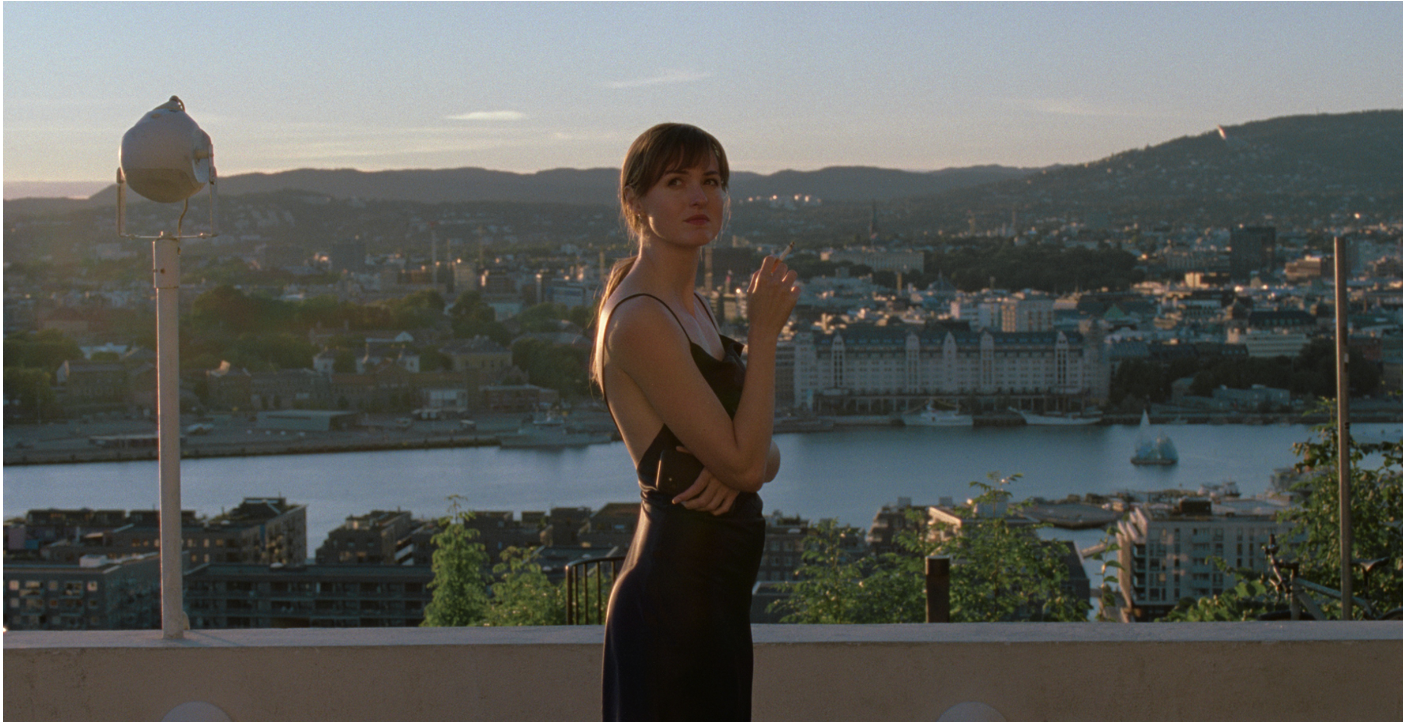
Film still from The Worst Person in the World, Joachim Trier, 2021
AR: So really it's about creating space for artists, and then sustaining that space? And by that I mean, it could be the actual space of a set, or financially, let’s say, if you have enough money, that gives people who need to work enough space to know that there isn't a deadline or a budget issue that's going to cramp their style or limit their creativity. So those people, thanks to you, can complete the work to the best of their capabilities.
CP: Yeah, absolutely. And everyone's different. With Pool, all the artists we’ve got on the roster are so unique. You can't compare them; they've all got different ways of working, which I'm going to learn a lot about over the next few months and find out what works for each. Okay, Saskia likes to work this way. She's better with these briefs versus Danny, who, let’s say, would love a studio. We always need this particular lighting assistant, and so forth. So it’s about finding the right team to support them, and then, when projects come through, bringing that team together.
AR: I guess that you never stop learning, do you, when it comes to approaching each artist? There are a lot of different voices and styles, and perspectives on Pool's roster, and now you’re trying to work out where they fit best. Is that an exciting challenge? I can imagine it would be hard some days, juggling several different briefs and personalities. Does that create a kind of helpful or productive schizophrenia, having to jump around so much and be part of so many different people's creative lives?
CP: I think it's just like a family Christmas for me. There are so many different personalities at one table. For me, I'm happiest when collaborating the way people want me to collaborate, because at the end of the day, it’s important that no matter what, we have a great relationship — great work can’t happen without that very basic human connection.
AR: You also kind of alluded to that balance between art and money, you know, the commercial facing stuff versus the personal work. All the artists in the Pool group have their own incredible body of work, but they've also worked with some massive names. And I was going back over an earlier interview you gave where you mentioned you’d been reading Joan Didion, who talks about this — sometimes it's just about paying bills, and sometimes it’s about being an artist. Is that part of the job for you, trying to negotiate that awkward intersection? Because even in some very famous ad campaigns, the money comes from people we don't traditionally associate with art. And yet that's a byproduct of that particular creative relationship. They often make genuine art through those ad campaigns, bits of indelible imagery or phrases that become part of the popular consciousness. Is it strange working in an industry where there’s that tension between those two impulses?
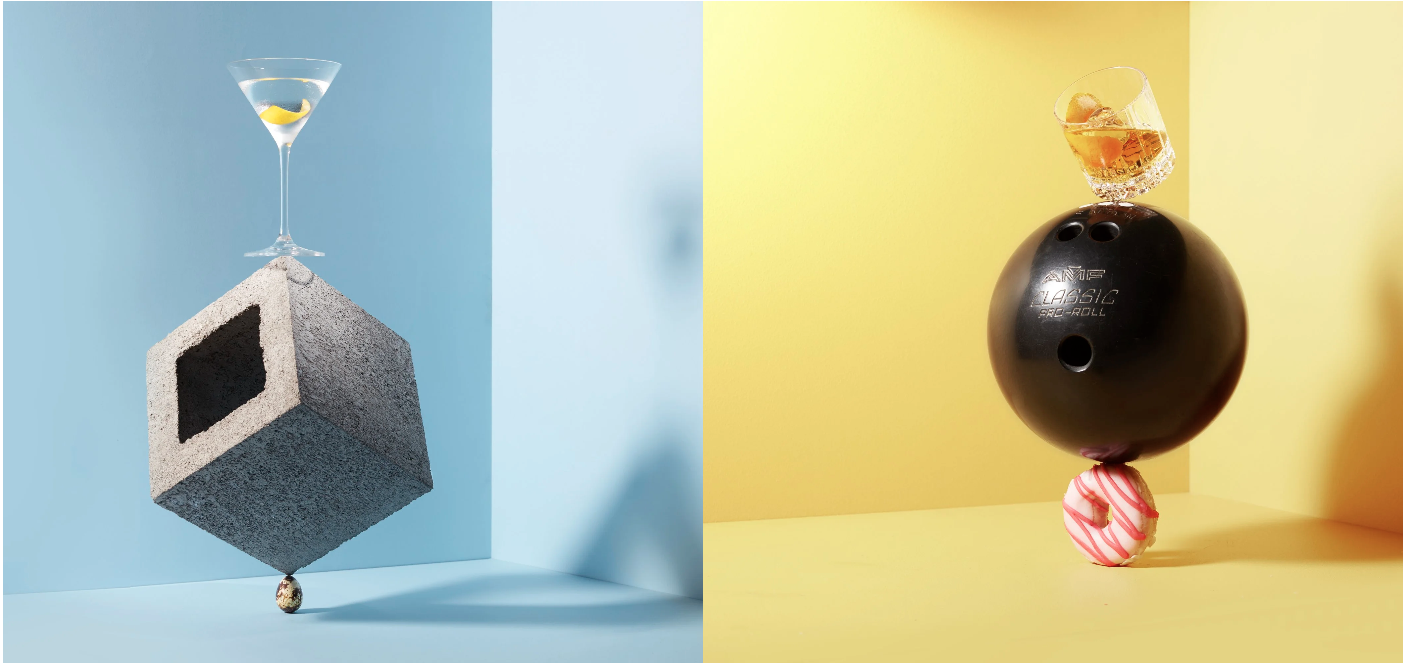
Danny Eastwood likes a studio
CP: It can be. But I'm finding now that in all honesty, anytime a brief comes through, that’s just part of the common conversation. Money is always the first topic — or close to it — and I'm pretty good at either finding a way to make that money work or encouraging, or perhaps cajoling, our clients to consider alternative approaches that might be more achievable within the budget. At the same time, it's almost always the most artistic work that has the smallest budget. That’s really a by-product of the fact that this type of work can be perceived as being more risky, and large corporate clients are traditionally risk-averse — lots of stakeholders to answer to, so sticking in a lane becomes a much simpler proposition than taking a chance on really creative work. There are, of course, outliers to this, such as the amazing work being created on the Telstra account by Bear Meets Eagle on Fire and +61. That’s actually a perfect example of art meeting commerce — go and watch some of that work, as it will be quicker to digest this concept by doing that than by listening to anything I can say about it to you in an interview.
Looping it back to our artists, which I think is where you were going with the question, the overall payoff is usually better for the artist. So for our artists, it's finding that balance: yes, you've got to pay your bills; this job might not necessarily be the work you're most proud of, but it will pay for the work you will be proud of in the end. It's just about finding that balance as briefs come through. Sometimes those worlds collide, where an artist's best work can be found in a commercial commission. In familiarising myself with our artists' previous work, I came across a project shot by Ingvar Kenne for GIO, and it is some of his best work — it leans heavily on the strengths of his portraiture work, and really, nobody else could have shot it. You could place the work inside frames on a white gallery wall, and it wouldn’t look out of place. That’s obviously the ideal. We’ll always do work that perhaps doesn’t hit such a standard — but we don’t always have to tell people that we made it!
AR: It's like that Bertold Brecht quote, you know, “Every day I take my wares to market, I take my place among the sellers.” That’s just part of it, that conversation between costs and creativity. But going back to that structural issue, you know, the idea of you giving space in your job — do you see yourself as protecting creative people from the more insistent or hindering aspects of production?
CP: Absolutely. And that would be the ideal scenario — from an agency perspective, with a client, you're trying to manage them and give them the confidence that the outcome they'll get is the best possible one. If the whole way through you're going to say, "Oh, this is really tight, if only we had an extra 500 grand, whatever it might be, then that's not going to end well because they're always going to have this idea of, well, 'if there was more, could this have been better?’ Compared to, well, if you give them the confidence that the budget you've got and the team that's behind it is the best one possible for the outcome that you're going to get, then everyone's going to be happy and do their best work. Then a client isn’t doubting the whole production throughout.
AR: The interesting thing about being a producer, any kind of producer, is that it's mildly egocentric. I mean, it has to be with that level of responsibility, but it’s also kind of selfless at the end of the day, because you’re working so that other people might rise higher. I remember watching the Oscars as a kid, and when the Best Picture was announced, I was very confused when the producers got up. “Hey, where’s the director, and how about the writer?” And that was my first realisation: okay, producers are actually, maybe deep down, the most powerful ones after all. But I guess you can't say that or think that!
CP: It’s not really about power, though, in Hollywood, I’m sure that comes into it. The misunderstanding you had about the Oscars as a kid was that the best picture award is a celebration of all the components of a film. They have separate awards for director, writer, etc. There are numerous examples of the best director award going to the director of a film that doesn’t win best picture — some people find that strange, too. So, best picture is really a nod to the fact that this was the most complete ‘picture’ in that calendar year — if you buy into such a notion — and who else would you have come up to receive that award than the person who was responsible for harmoniously bringing all those component parts together.
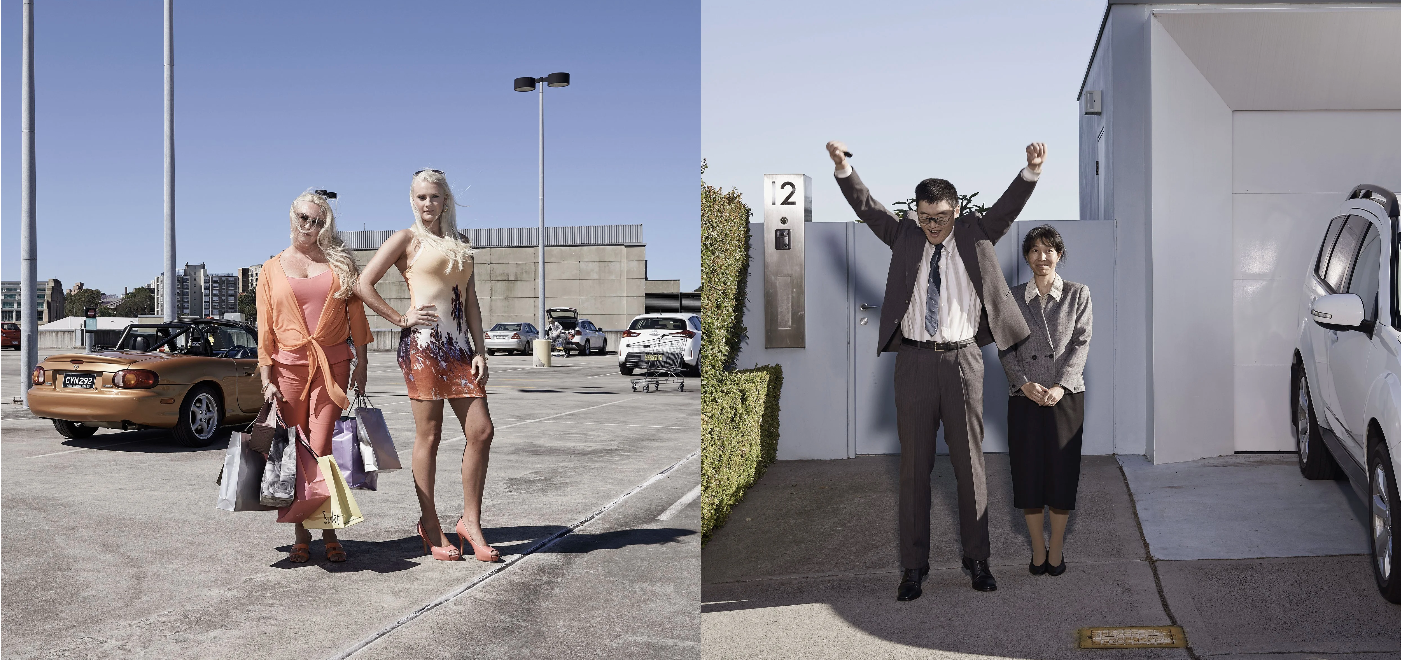
Ingvar Kenne for GIO
At the same time, ask someone to name a Hollywood producer, and most people can't. I think it's becoming a bit more common now: people clocking that many directors are also producers. Rick Rubin is also helping with the notion of the cult of the producer. But in all honesty, when I first started out, I didn't know I wanted to be a producer. I didn't really know what that meant. My parents still don't know what I do! They just think that I'm like, "Do you take the photos? Do you make the films?" Luckily, like many people, I just fell into it through an internship I had during university. I started out as a creative executive, working with clients and creatives, and realised I’m best at being that in-between person. I can be very client-facing — I love artists and creatives. But sometimes they need a little bit of a filter on their mouth! And that's where being that middle person works best, I can then get their voice through to the client and make sure that everyone can work harmoniously together, so at the end of the day, we can get an outcome everyone’s happy with.
AR: We started talking about films, and I wanted to circle back to that — in terms of work you treasure, or you've enjoyed recently, what kind of work do you hold dear, or what kind of work means a lot to you, as a sort of ideal?
CP: I think the work that I'm really drawn to right now feels real in some sense — that it's not necessarily about shoving a product down a consumer’s throat or forcing something upon a viewer. And so what I'm really interested in, and this is something that Cameron and I have spoken about already, is building in a department or building in a team of artists who have got more of an eye in the documentary space. For me, it’s about finding ways to do even better work and partner meaningfully with our client partners. An example of that is the recent Canon documentary on their new lenses, something that’s real and grounded while also entertaining. I guess now that I'm saying it out loud, I think finding ways to have advertising and entertainment combine, as opposed to something like a standard ad, is the space that I'd probably want to start going into. I think that’s my overarching ambition here at The Pool Collective.
AR: You mentioned that word documentary a few times there — do you think there's a certain challenge there, given how images work now, and how we understand them? There's a certain kind of language that gets used when you want to be “real” — a certain film stock or grain, for example. We live in the streaming era, an age of really flat digital imagery. It’s odd, but you can watch the worst film from 1970, and it still looks gorgeous, while even lots of quite good recent films look somehow a bit off — no weight, no presence. But then again, digital, when used properly, has its own magic, if you can find a way.
CP: The original Jurassic Park is a great example. You can watch that, and it looks like it was made yesterday. It's fantastic, but it reminds you that even though we've had access to infinitely more advanced technology, it doesn't necessarily mean we have more craft. With documentary, or at least thinking about that approach, it’s a useful counterbalance against something like the proliferation of AI slop. For younger audiences, that’s their world, getting spammed on social media with images of people that are borderline alien. They're just amalgamations of faces fed into a generator. And so finding those authentic people, those authentic faces and their human stories, posited in real locations — that’s the challenge, that’s where you want to work, those are the stories you want to tell. The real world isn't perfect. There is a bit of grime. There is a bit of grit. We just need to learn that that's the way the world is. Or relearn it. It’s a very good moment to be welcoming an artist like Tajette O’Halloran into our group.
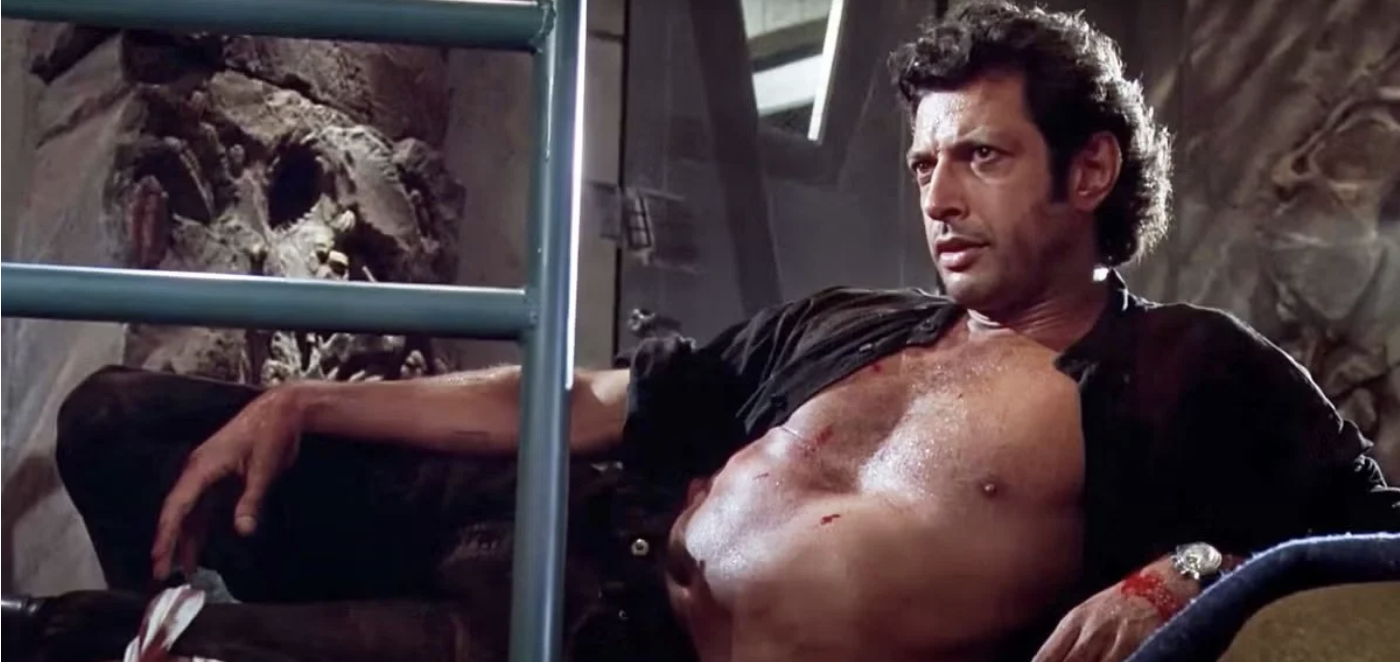
Life finds a way
Film still from Jurassic Park, Steven Spielberg, 1993
AR: Ha, I do like that you managed to combine documentaries and Jurassic Park in the same answer, perfect. In the last month, I've rewatched the original and the most recent one, and it’s stark how bad the new stuff can be without any guiding hand. And there you go, I accidentally tied it back to producing! I meant to, of course. But seriously, I’m assuming your role, in some fundamental way, is about decision-making. In the everyday sense, I mean, the constant decisions and negotiations. Without any real decision-making, there's no shape to anything; no one is willing to make the call.
CP: You have to be willing to step in while also knowing when the moment is right to stage that intervention. The producer is part conjurer, part magician, both a good cop and a bad cop, depending upon the circumstances. We’re the creative consigliere, so in a Godfather sense, the producer is Tom Hagen, the collective is the Corleone family! I guess that's where it becomes, again, what the role means to me. Having these relationships with artists as someone they trust is important. At the end of the day, I'm hoping that they turn to me to validate what they're thinking — no matter how crazy the idea. And when I'm suggesting something, they know that it's ultimately to serve their best interests, even though at the time it might not sound like it!
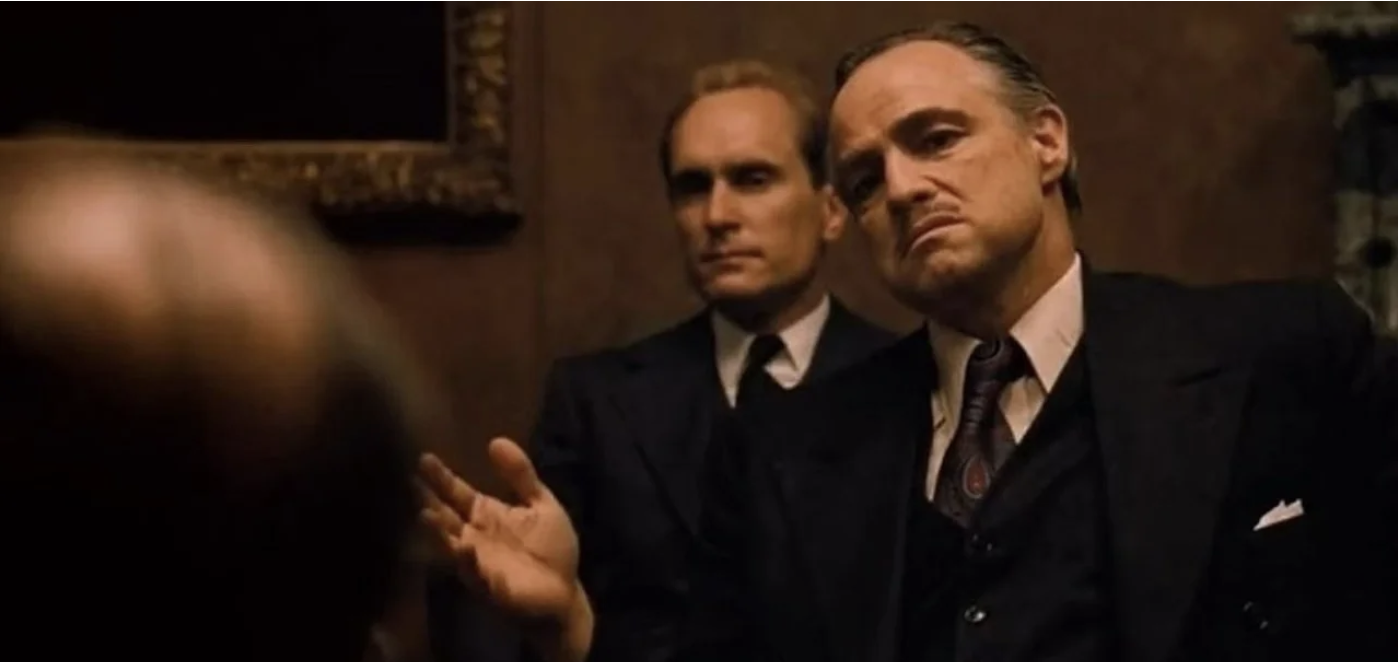
il consigliere
Film still from The Godfather, Francis Ford Coppola, 1972
AR: We’ve discussed some international art films, but I wanted to focus on home a little bit — obviously, we’re all a little neurotic about not being artistically minded like our European overlords. You mentioned in an earlier interview that you completed a Bachelor of Communication in Media Arts and Production. Are there any other artists or ideas that you think stem from that earlier time of study and reflection?
CP: I really like Ruben Östlund’s, especially Triangle of Sadness, if we’re talking recent stuff. And I think his work is quite interesting, comparing where it started to what it is now. It was initially very bare-bones, and then there’s Triangle of Sadness, which is basically a Hollywood film.
When I was studying, I lived in Madrid for a year, just watching European films. Which did expose me to stuff I wasn’t getting in Australia. And I think the craft that I learned, well, I don't know how relevant it is necessarily to what I do in my job day to day, but it is relevant to my passions. And that’s the emotion that I think European films have. And I don't know why that is. And maybe it's a sentiment around Australia that we are a bit cold. We don't really like to dive into emotions. We're fine showing other stuff in the film work that comes out of Australia, we're fine showing the grit, we're fine showing the harsh realities of a place, but emotion is something that I feel we aren't really tapping into compared to a European film. In a French, Norwegian or Italian movie, in just a shot, a single look, you'll be able to feel what they're feeling, and understand what they’re thinking.
AR: I agree that the Australian tendency can be to drift towards stoicism and restraint, which is limiting. And the idea of a single look or image is interesting. I guess advertising, either a single image or a one-minute campaign, let’s say, you haven't got much time there, so everything has to be maximalist to a certain degree. A lot of imagery and narrative is now pushing into a harder, faster digital space — do you think there are new spaces and different kinds of places where advertising and Pool’s work can reach people in ways that we're not currently thinking about?
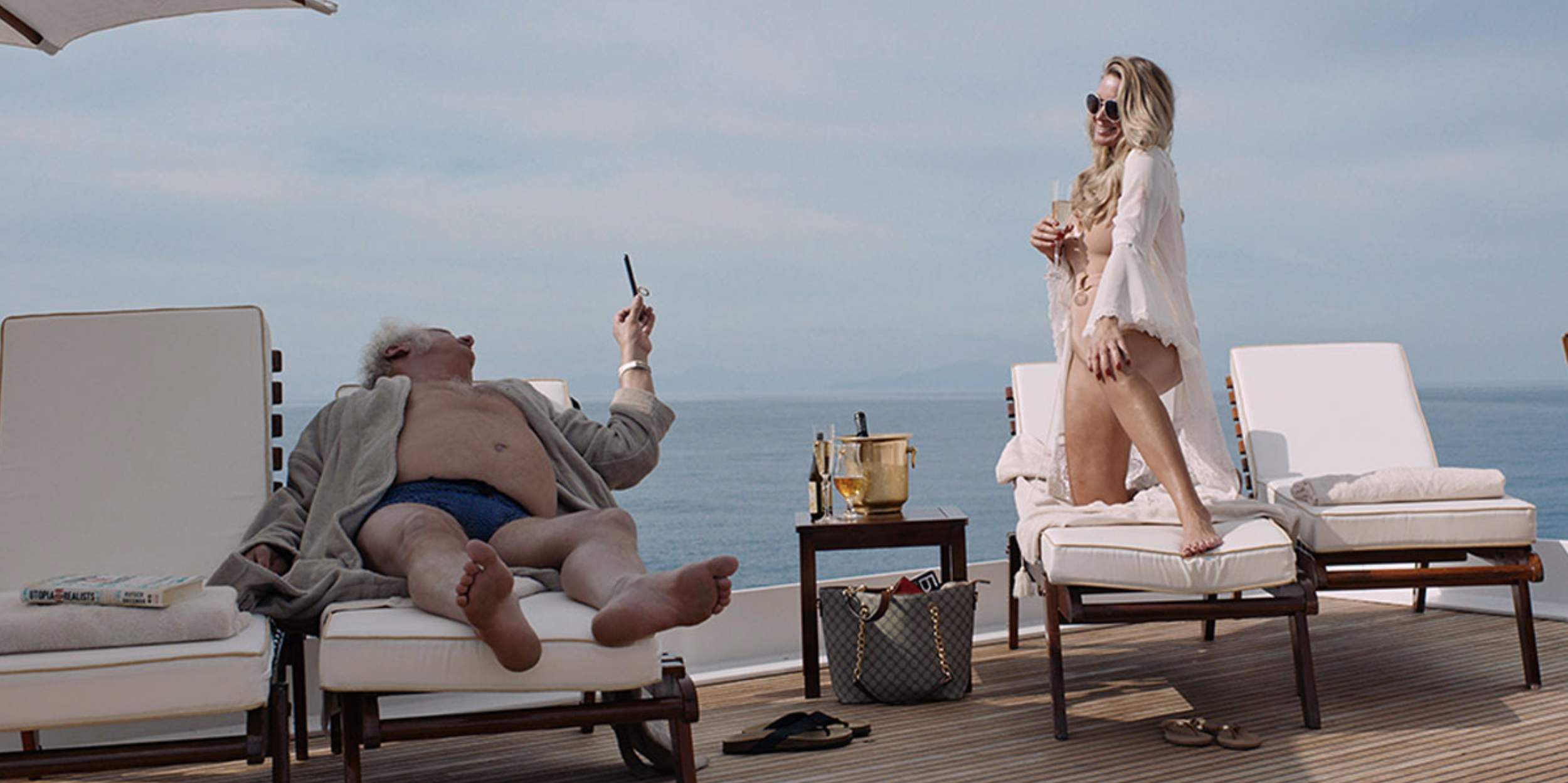
Film still from The Triangle of Sadness, Ruben Östlund, 2022
CP: Yeah, absolutely. TikTok is probably the most common platform for engagement and content now. I'm on there just to find new creators, to see what work is out there. In terms of how we reach people and have that work find new people, well, that's always evolving. Even if that means going back to square one, like finding spaces, holding exhibitions, doing things that are maybe a bit more grounded. I'm a big fan of activations, almost guerrilla-style activations. And I think that's a great way to reach people in a different way, but also how it changes a campaign — you can shoot content, so you can still use that for your socials and build off of that, but the main idea is that it’s something that’s in the real world. It's tangible. People can touch it! And so, with Pool, it's working with our artists and finding ways to do that. Whether it’s, yes, there's the shoot, but off the back of it, something else is grounded around it. Whether that’s a billboard that people can interact with, or maybe an activation. Something that finds people in a new way.
AR: This might be a hard one to answer, as I know you’ve just started, and so much time when you start any gig is just jamming a million new things in your brain, but is there somewhere, in an abstract sense, you'd like to take Pool? Or that you want out of Pool, or you can imagine it doing in the future, that it may not be doing now?
CP: Where Pool is at right now is great, and I just want to come in and kind of build off of that. I’m very much on the same page as Cameron in that, at base, what we’re working on is just pushing it as far as we can take it. Discovering new artists who fit our aesthetic is also part of that push, I suppose, and this week we welcome the amazing Tajette O’Halloran into our group, so that’s super exciting.
That's where just watching who’s who on TikTok is important — that’s where people are posting content: seeing young graduates, the work they’re doing or are going to make, going to film festivals, and finding artists who are unattached or have been overlooked for one reason or another. And it might not necessarily mean that we're just building out a roster so we can say “we've got more people, we can do more work” — it's about selection, curation, and making sure that Pool is always positioned as a place where artists can come and work — and flourish. We feel very much like a family— without sticking in another Godfather reference! But I've been here for three weeks, and it already feels like that. I've just moved straight in. We’ve got such a welcoming environment — and there is actually a swimming Pool at the office — they weren’t joking about that!
The main thing about Pool is that the artists can focus on being themselves, and I’ve been granted full stewardship of that idea. They’re the reason we’re here. But also, on top of that, we all understand that when the project briefs come through, it's like, right then, let's focus on that now. Let’s put our personal stuff aside and find that balance. Let’s get to work.
All works © credited under image
Explore Pool